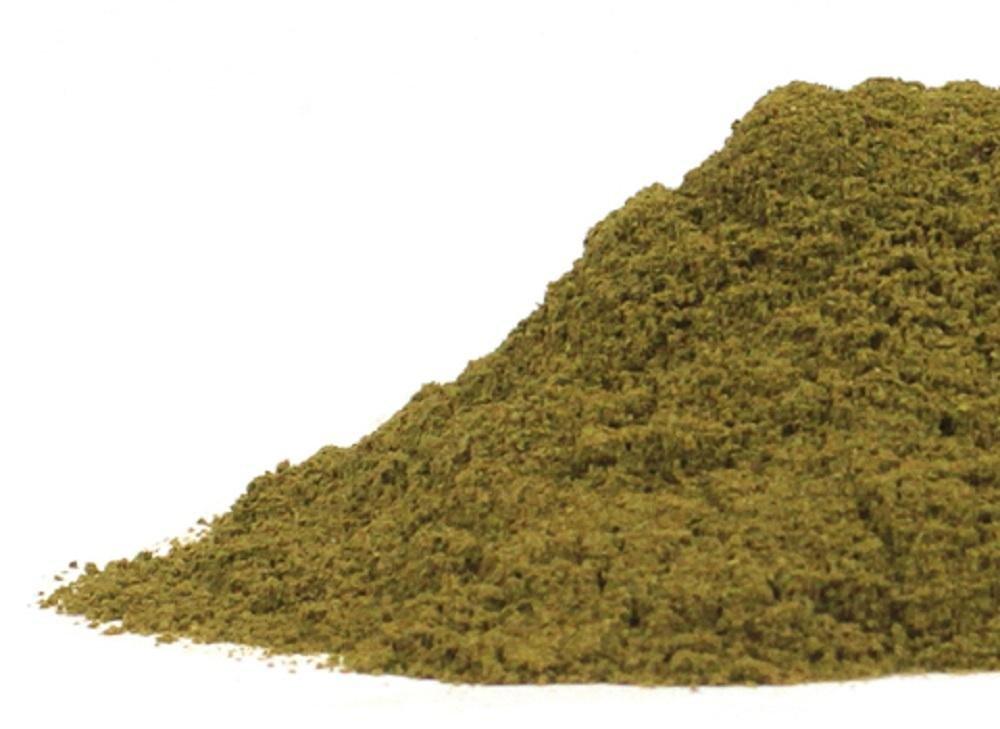
Description
- Botanical Name - Moringa oleifera
- The Wonder Tree, The Divine Tree, The Miracle Tree, Drumstick Tree, West Indian Ben, Muringa (Tamil) Jacinto (Spanish) Sahijan or Munaga, (Hindi) Shigru or Shobhanjana (Ayurvedic).
- Origin - India
- Flavor Profile - Has a nutty, leaf-like taste that is neutral enough to blend in with beverages and foods.
- Culinary Usages - Moringa leaves have an extremely high nutrient value and are dried and powdered and put in sauces and baby formula. A beverage is made from the leaf, either as a standard tea or as a type of reconstituted dried leaf juice.
Moringa powder is recognized as one of nature's most nutritious superfoods. Freshly ground from dried moringa oleifera leaves, it is rich in vitamins, minerals and essential amino acids. Moringa powder is even considered a complete protein because it contains all nine essential amino acids. Moringa is native to the sub Himalayan mountain region particularly in India and has been introduced to southwest Asia, southwest and northeast Africa, Madagascar, the Philippines, and in the United States in California, Arizona, Hawaii and Florida. This tree is in the Moringaceae, or horseradish tree, family which is closely related to the papaya containing Caricaceae family. The generic name is derived from the Tamil (language spoken in southern India and northeast Sri Lanka) word 'murungai' meaning twisted pod. And 'oleifera' is Latin meaning 'oil-bearing' due to the seeds high oil content. Dried leaf as an additive to foods to increase nutritional value, or as a tea or juice. Moringa powder may be stored in a cool, dry place for up to one year. It may also be refrigerated to preserve freshness.